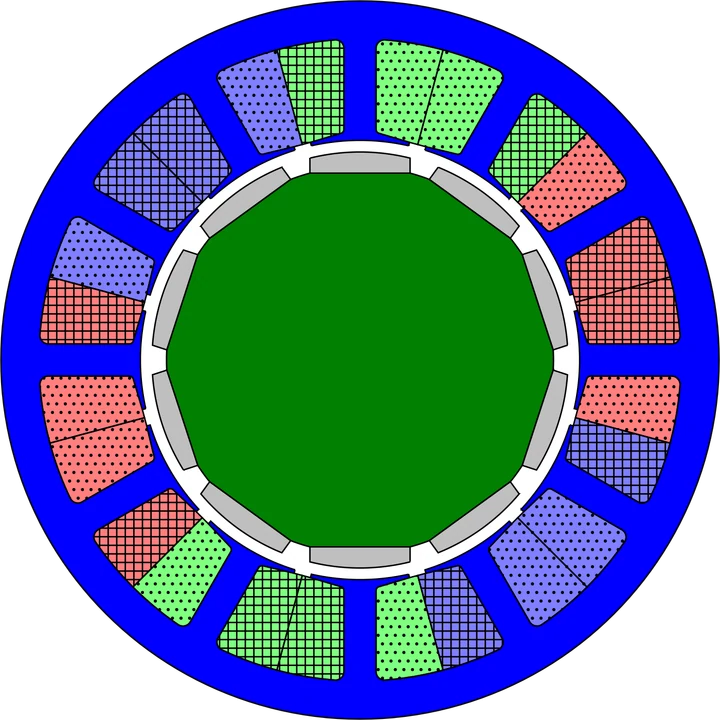
Surface-magnet PMSM
Surface-mounted and inset magnets, magnetised radially, in parallel or breadloaf-shaped.

AGFEM builds the geometry parametrically. Pick the machine type, set the main dimensions, solve — inner and outer rotor, radial and axial flux.
Surface-mounted and inset magnets, magnetised radially, in parallel or breadloaf-shaped.
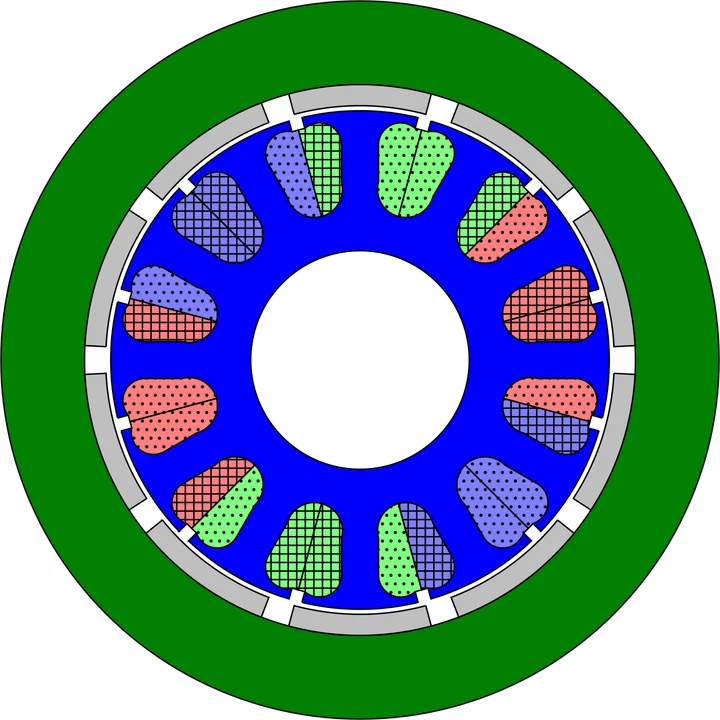
The same compute path with the rotor on the outside — typical for hub, fan and drone drives.
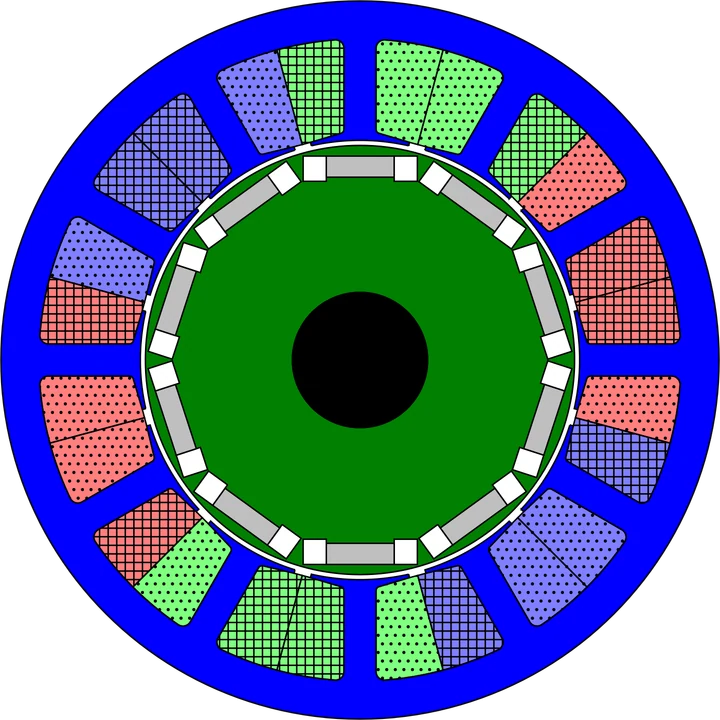
Buried flat magnets with flux bridges — the best-calibrated variant in AGFEM.
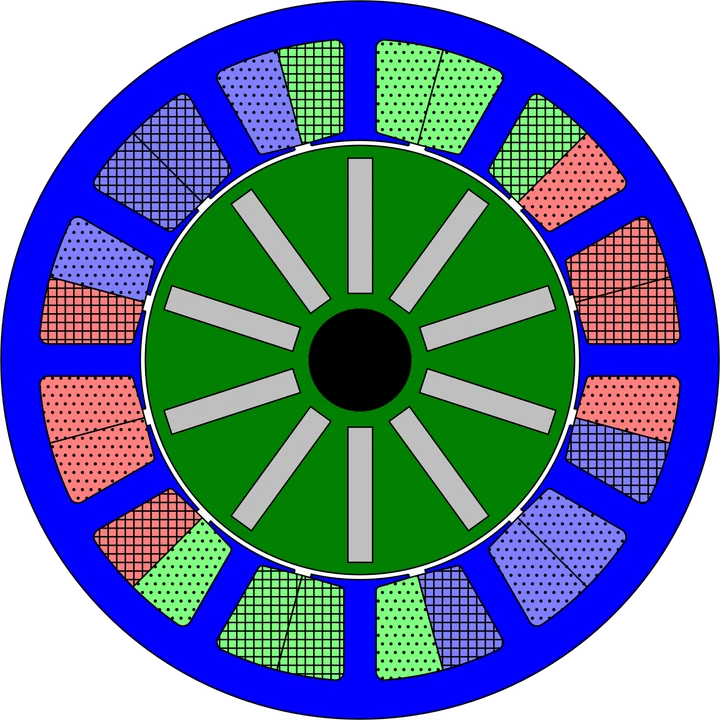
Flux concentration through tangentially magnetised spokes — ferrite magnets included.
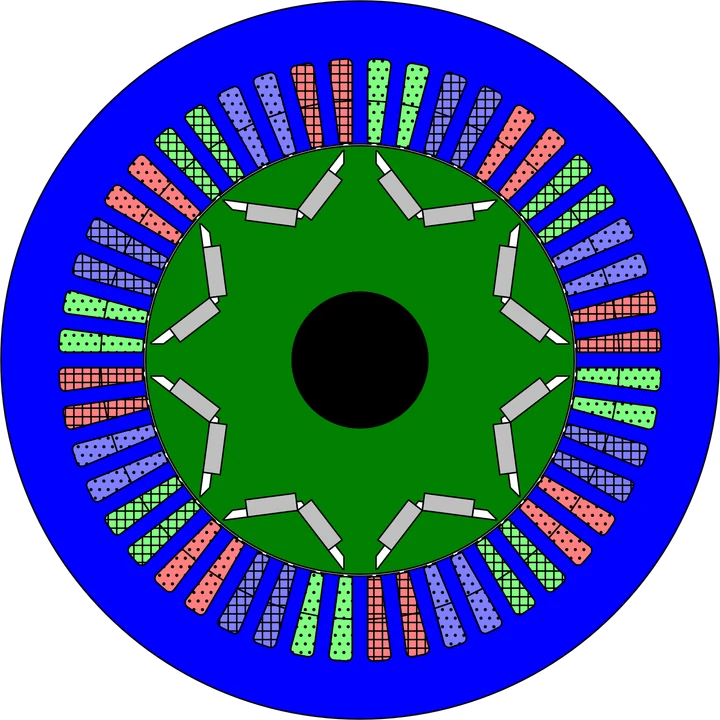
A pair of magnets in a V, combinable with hooked teeth and an asymmetric tooth tip.
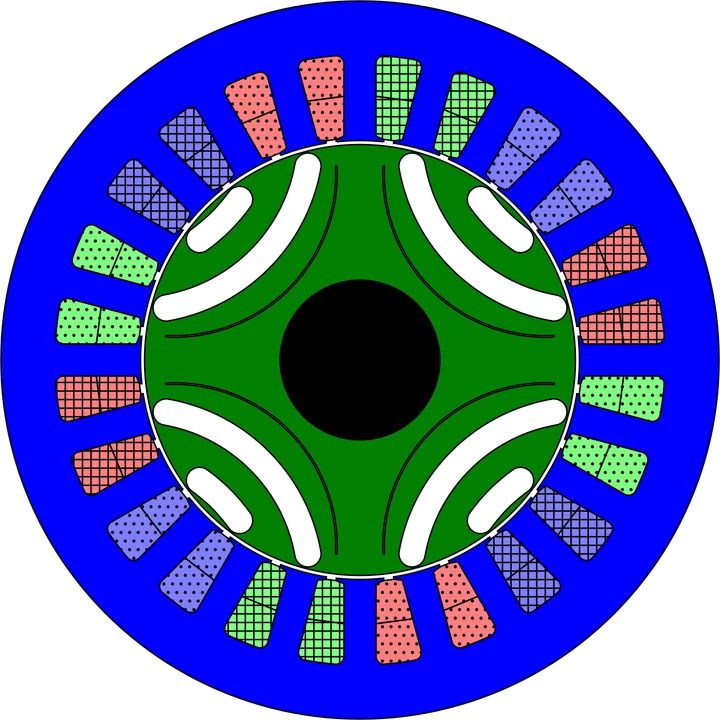
Flux-barrier rotor, optionally PM-assisted with ferrite or NdFeB inside the barriers.
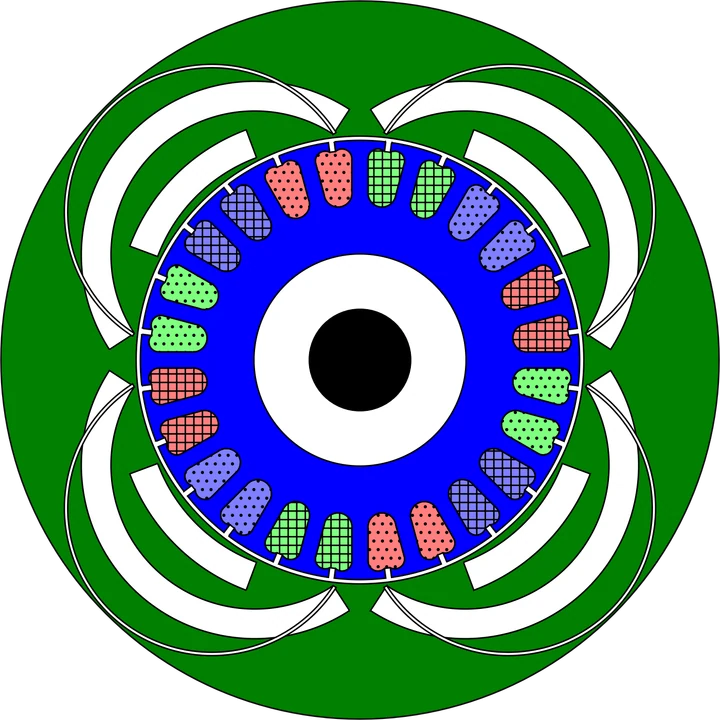
Reluctance rotor on the outside — a magnet-free option for cost-sensitive direct drives.
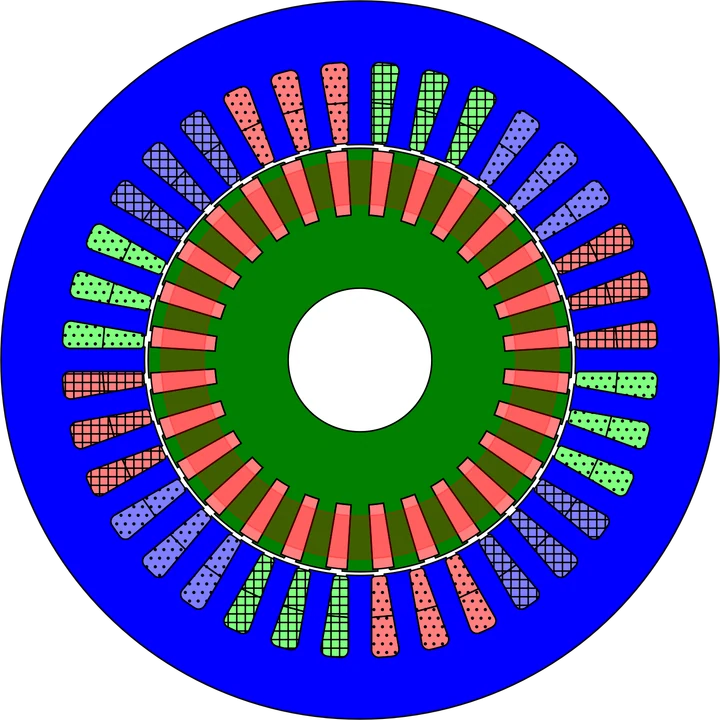
Time-harmonic solve with complex bar currents and slip as an operating variable — inner and outer rotor.
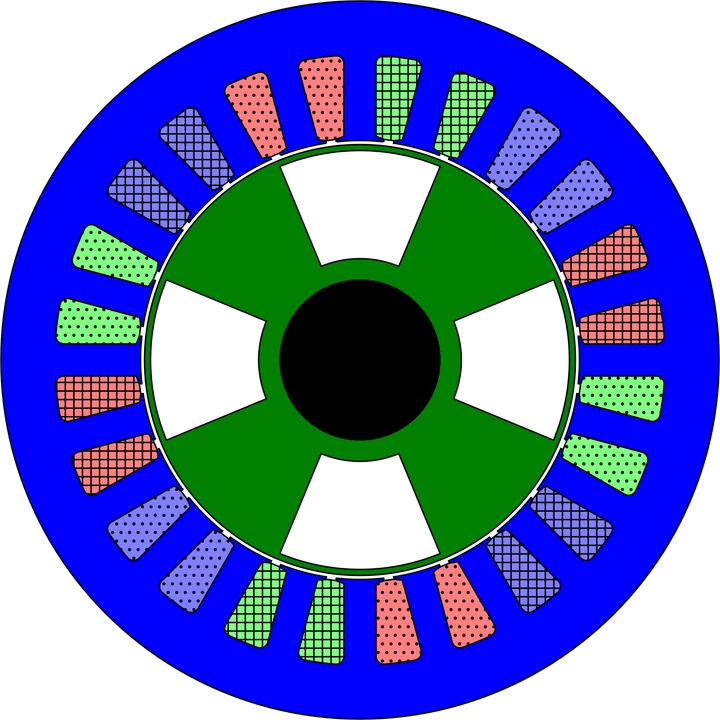
A field winding instead of magnets, with field current as its own operating parameter — sector solve keeps run times short.
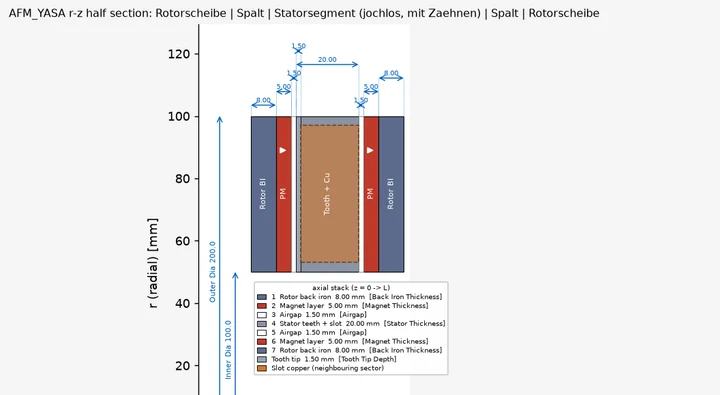
A segmented stator with no back iron between two magnet rotors. Short flux path, little iron, high torque density.
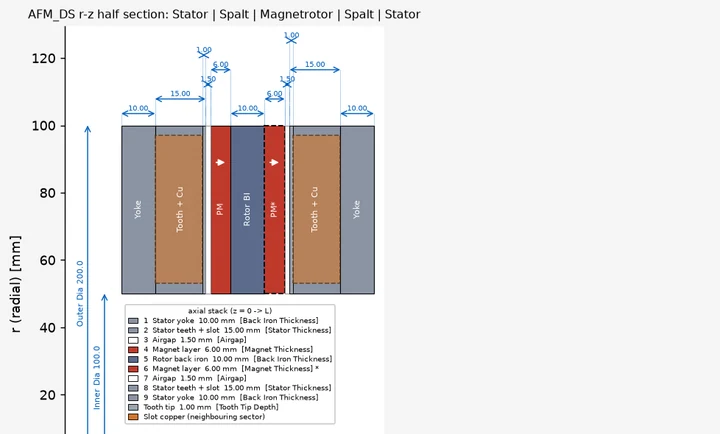
One magnet rotor between two stators. The axial pull of the two gaps cancels, which keeps the bearings unloaded.
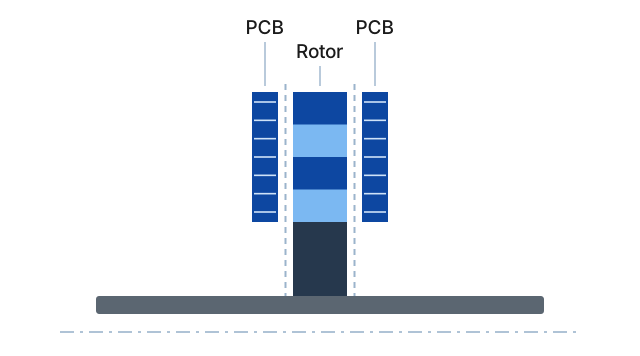
One magnet rotor between two ironless printed-circuit stators: no cogging, no stator iron loss, a very flat build.
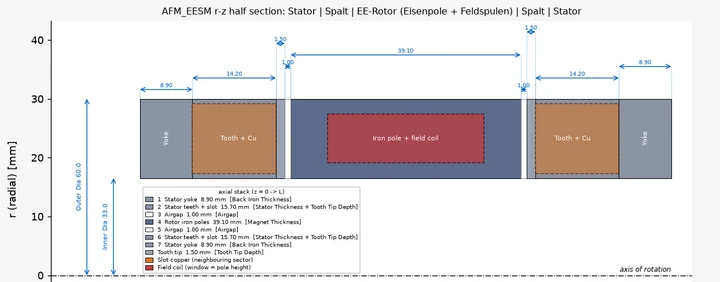
One wound-field rotor between two stators: field coils instead of magnets, no rare earths, and the field is set by the field current. No other commercial tool computes this combination.
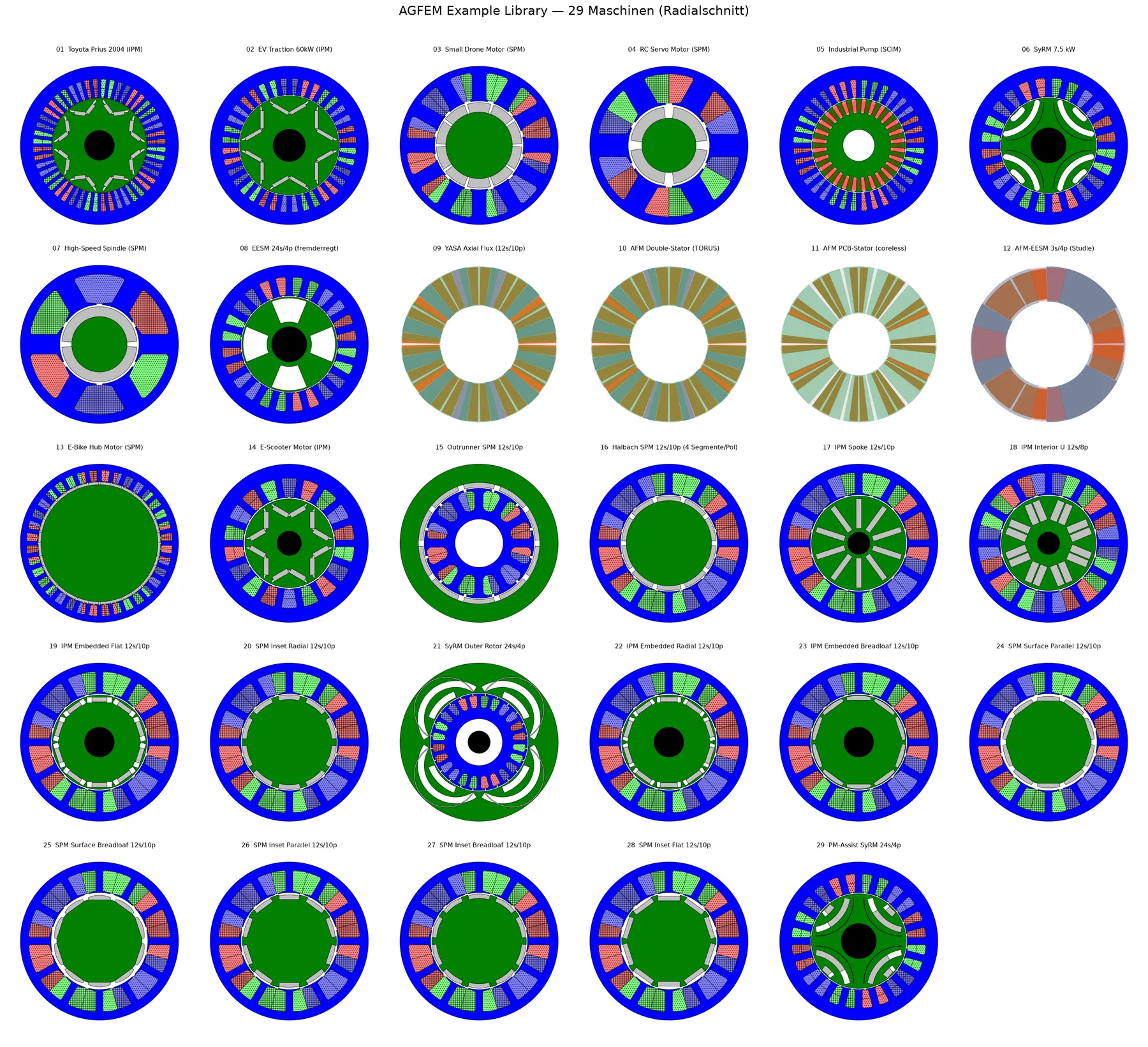
The radial cross-sections are unedited AGFEM output. The axial-flux images are schematic stack-up sketches.
The software ships with 29 ready-parameterised machines — from an RC servo through the Toyota Prius to an axial-flux disc. Open any of them, run it, and rebuild it into your own design.
Sign up, download, install — the 30 days only start with the first activation inside the software.